All posts by Chuck Norton

I write about politics, education, economics, morality and philosophy.

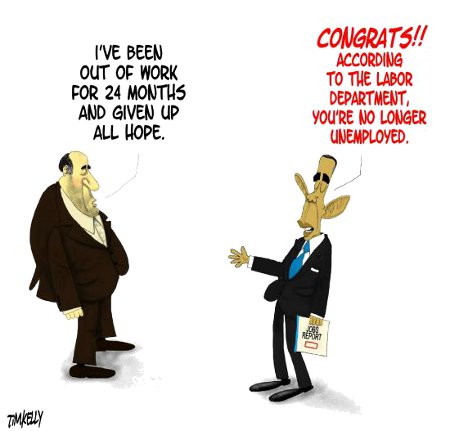
16.8% of millenials are unemployed or have given up looking for work

Via our pal Michelle Fields at The Daily Caller:

New jobs numbers for June released Friday show that Americans 18-29 years old continue to suffer under the Obama administration with a 12.8% unemployment rate.

The jobs report shows that there are now 1.735 million young Americans who are no longer counted as “employed” because they have given up looking for a job and have left the labor force all together.

Generation Opportunity — a conservative non-profit focused on young Americans — notes that if “the labor force participation rate were factored into the overall 18-29 youth unemployment calculation, the actual 18-29-unemployment rate would rise to 16.8 percent.”

CNBC: Best place to do business and create jobs is Texas

Will the Democrats send Rick Perry congratulations?

CNBC:

#1 – Texas

We scored all 50 states on 43 measures of competitiveness developed with input from business groups including the National Association of Manufacturers and the Council on Competitiveness. States received points based on their rankings in each metric. Then, we separated those metrics into ten broad categories, weighting the categories based on how frequently they are cited in state economic development marketing materials. That way, our study ranks the states based on the criteria they use to sell themselves.

Here are the ten categories ranked in our study:

Study: In Maryland, Higher Taxes Chase Out Rich

This is not a surprise. Wealth goes where it is treated well and as we saw on the last Census people are voting with their feet to Republican controlled states. I first reported on this back in 2009 when Maryland actually lost revenue after they imposed their “millionaire’s tax”.

CNBC:

The study, by the anti-tax group Change Maryland, says that a net 31,000 residents left the state between 2007 and 2010, the tenure of a “millionaire’s tax” pushed through by Gov. Martin O’Malley. The tax, which expired in 2010, in imposed a rate of 6.25 percent on incomes of more than $1 million a year.

The Change Maryland study found that the tax cost Maryland $1.7 billion in lost tax revenues. A county-by-county analysis by Change Maryland also found that the state’s wealthiest counties also had some of the largest population outflows.

In total, Maryland has added 24 new taxes or fees in recent years, Change Maryland says. Florida, which has no income-tax, has been a large recipient of Maryland’s exiled wealthy.

“Maryland has reached the point of diminishing returns. We’re taxing people too much and people are voting with their feet,” said Change Maryland Chairman Larry Hogan. “Until we change our focus from tax increases to increasing the tax base, more people are simply going to leave, leading to a downward spiral of raising revenues on fewer citizens.”

The finding adds to the renewed debate over raising taxes on the wealthy. In New Jersey, Gov. Chris Christie recently vetoed a millionaire’s tax passed by his legislature, while California and other state governments are also considering higher taxes on high earners to fix budget problems. President Obama on Monday asked Congress to extend tax cuts for those making $250,000 or less – effectively increasing taxes for the higher earners.

Many contend that higher taxes drive out the highly mobile rich, who can simply move to a lower-tax state or even lower-tax country. Recent data shows that a record 1,800 Americans renounces their citizenship last year.

Leading Demographer: The Great California Exodus

Related:

California tops states in teen unemployment. Students with jobs hits 20 year low – LINK

Nine of the top 10 jobless metro areas are in California – LINK

Wall Street Journal:

A leading U.S. demographer and ‘Truman Democrat’ talks about what is driving the middle class out of the Golden State.

‘California is God’s best moment,” says Joel Kotkin. “It’s the best place in the world to live.” Or at least it used to be.

Mr. Kotkin, one of the nation’s premier demographers, left his native New York City in 1971 to enroll at the University of California, Berkeley. The state was a far-out paradise for hipsters who had grown up listening to the Mamas & the Papas’ iconic “California Dreamin'” and the Beach Boys’ “California Girls.” But it also attracted young, ambitious people “who had a lot of dreams, wanted to build big companies.” Think Intel, Apple and Hewlett-Packard.

Now, however, the Golden State’s fastest-growing entity is government and its biggest product is red tape. The first thing that comes to many American minds when you mention California isn’t Hollywood or tanned girls on a beach, but Greece. Many progressives in California take that as a compliment since Greeks are ostensibly happier. But as Mr. Kotkin notes, Californians are increasingly pursuing happiness elsewhere.

Nearly four million more people have left the Golden State in the last two decades than have come from other states. This is a sharp reversal from the 1980s, when 100,000 more Americans were settling in California each year than were leaving. According to Mr. Kotkin, most of those leaving are between the ages of 5 and 14 or 34 to 45. In other words, young families.

The scruffy-looking urban studies professor at Chapman University in Orange, Calif., has been studying and writing on demographic and geographic trends for 30 years. Part of California’s dysfunction, he says, stems from state and local government restrictions on development. These policies have artificially limited housing supply and put a premium on real estate in coastal regions.

“Basically, if you don’t own a piece of Facebook or Google and you haven’t robbed a bank and don’t have rich parents, then your chances of being able to buy a house or raise a family in the Bay Area or in most of coastal California is pretty weak,” says Mr. Kotkin.

While many middle-class families have moved inland, those regions don’t have the same allure or amenities as the coast. People might as well move to Nevada or Texas, where housing and everything else is cheaper and there’s no income tax.

And things will only get worse in the coming years as Democratic Gov. Jerry Brown and his green cadre implement their “smart growth” plans to cram the proletariat into high-density housing. “What I find reprehensible beyond belief is that the people pushing [high-density housing] themselves live in single-family homes and often drive very fancy cars, but want everyone else to live like my grandmother did in Brownsville in Brooklyn in the 1920s,” Mr. Kotkin declares.

Read more HERE.

83% of American physicians have considered leaving the profession over ObamaCare

This is up from 2010 where two polls showed that 45% of doctors would quit taking government insurance if ObamaCare was enacted.

Newsmax:

Eighty-three percent of American physicians have considered leaving the profession over President Barack Obama’s healthcare reform law – and 63 percent have called for repealing all or part of it, according to a survey by the Doctor Patient Medical Association.

The results from the non-partisan association of doctors and patients, founded last fall and headquartered in Alexandria, Va., is based on a national survey of 699 physicians, the Daily Caller reports.

By 2020, the U.S. is expected to face a shortage of at least 90,000 doctors. Because the new healthcare law expands insurance coverage, it will increase physician demand.“Hands down, doctors blame government involvement for the current problems in medicine, and are not shy to say they want it out,” the association says in a report on the survey findings.“The reasons cited range from the deluge of regulatory compliance that siphons time away from patient care, to de facto rationing achieved through complex payment schemes, to cushy relationships that favor corporations and special interests in medicine.”

The organization found that many doctors don’t believe the legislation will give more Americans quality care, association co-founder Kathryn Serkes said.

“Doctors clearly understand what Washington does not — that a piece of paper that says you are ‘covered’ by insurance or ‘enrolled’ in Medicare or Medicaid does not translate to actual medical care when doctors can’t afford to see patients at the lowball payments, and patients have to jump through government and insurance company bureaucratic hoops,” she said

As for Obamacare specifically, the association said: “Doctors say that a key government provision in the Affordable Care Act, the huge expansion of Medicaid enrollees, is likely to backfire, as 49 percent say they will stop accepting Medicaid payments.”

The head of Barack Obama’s “Jobs Council”, is moving even more jobs and infrastructure to China

Attacking the few companies that Bain Capital invested in that had to do some outsourcing to survive is the Obama Administration’s attack plan against Mitt Romney. But after setting up a jobs program for illegal aliens you would think that the hypocrisy from the Obama Campaign could not get much thicker; we thought that too and we were wrong.

Related – White House Connected GE Pays No Tax on $14 Billion ….Again! – LINK


Economic Collapse Blog has the details with multiple sources and links for your viewing pleasure:

GE-CEO-Jeffrey-Immelt
Jeffery Immelt – General Electric CEO, Head of Obama’s “Jobs Council”.

Jeffrey Immelt, the head of Barack Obama’s highly touted “Jobs Council”, is moving even more GE infrastructure to China.  GE makes more medical-imaging machines than anyone else in the world, and now GE has announced that it “is moving the headquarters of its 115-year-old X-ray business to Beijing“.  Apparently, this is all part of a “plan to invest about $2 billion across China” over the next few years.  But moving core pieces of its business overseas is nothing new for GE.  Under Immelt, GE has shipped tens of thousands of good jobs out of the United States.  Perhaps GE should change its slogan to “Imagination At Work (In China)”.  If the very people that have been entrusted with solving the unemployment crisis are shipping jobs out of the country, what hope is there that things are going to turn around any time soon?

Earlier this month, Immelt made the following statement to a jobs summit at the U.S. Chamber of Commerce….

“There’s no excuse today for lack of leadership. The truth is we all need to be part of the solution.”

Apparently Immelt’s idea of being part of the solution is to ship as many jobs overseas as he possibly can.

A recent article on the Huffington Post documented how GE has been sending tens of thousands of good jobs out of the country….

As the administration struggles to prod businesses to create jobs at home, GE has been busy sending them abroad. Since Immelt took over in 2001, GE has shed 34,000 jobs in the U.S., according to its most recent annual filing with the Securities and Exchange Commission. But it’s added 25,000 jobs overseas.

At the end of 2009, GE employed 36,000 more people abroad than it did in the U.S. In 2000, it was nearly the opposite.

GE is supposed to be creating the “jobs of tomorrow”, but it seems that most of the “jobs of tomorrow” will not be located inside the United States.

The last GE factory in the U.S. that made light bulbs closed last September.  The transition to the new CFL light bulbs was supposed to create a whole bunch of those “green jobs” that Barack Obama keeps talking about, but as an article in the Washington Post noted, that simply is not happening….

Rather than setting off a boom in the U.S. manufacture of replacement lights, the leading replacement lights are compact fluorescents, or CFLs, which are made almost entirely overseas, mostly in China.

But GE is far from alone in shipping jobs and economic infrastructure out of the United States.  For example, big automakers such as Ford are being very aggressive in China.  Ford is currently “building three factories in Chongqing as part of $1.6 billion investment that also includes another plant in Nanchang”.

Today, China accounts for approximately one out of every four vehicles sold worldwide.  The big automakers consider the future to be in China.

Just a few decades ago, China was an economic joke and the U.S. economy was absolutely unparalleled.

Hawkins: Five Annoying Types Of Republicans

Our friend John Hawkins made this fun, but important post on something that many of us take for granted. This reminder of what a Republican should not be is always timely. Everyone should print this one out and keep it in their wallets 🙂

John Hawkins:

The mainstream media is awash with criticism of Republicans, but it always denounces the wrong people. If you listen to the media, you’d think the GOP is being wrecked by people like Jim DeMint, Allen West, Sarah Palin, and the Tea Party. In other words, the real problem with the Republican Party is supposed to be the responsible conservatives who put their country first, want to keep us from going broke, and actually represent the people who elected them. Wrong answer, buddy. You want to know the types of Republicans that are hurting the GOP?

1) The Sell Outs: Liberals love pundits who claim to be conservatives, but tell them what they want to hear about the Republican Party. So, if you have no integrity, like say David Frum, David Brooks, Meghan McCain, Joe Scarborough, or Kathleen Parker, you call yourself a Republican, but spend most of your time criticizing your “own side.” Nothing on the Left ever seems to get you as agitated as the things the people “on your side” do. Liberals get a pass for the same sort of comments that infuriate you when it comes out of the mouth of a conservative. That’s because when you’re a performing seal for the Left, you have to be tame and balance a ball on your nose just the way the Lefties like or they might stop giving you fish.

2) The Purists: Of course, you can go too far in the other direction, too, like the members of the “I’m more conservative than you” club. These are the people who tell you there’s no difference between the Republican Party and the Democrats. They take their ball, go home, and don’t vote in the general election when the candidate they support doesn’t win a primary. Issues like electability, the chances of actually passing legislation, and what the general public wants are never taken into consideration. This is how you end up with people who think we can do better than Scott Brown (71% ACU rating) in Massachusetts or that we can just decide to never raise the debt limit again, even though we’ve already spent all of the money. If you want to have it your way, go to Burger King because you’re not ever going to get everything you want in politics.

3) The Appropriators: If there’s one defining difference that separates Republicans from Democrats, it’s spending. Republicans want less of it, Democrats want more — well, at least that’s how it should be. Yet, there are big government Republicans. There are Republicans who love earmarks. There are Republicans who think it’s fine to fritter taxpayer money away, but they just want to waste a little less than the Democrats. These people are not just killing the Republican brand; they’re helping to ruin the country.

4) The Bubbleheads: One of the idiosyncrasies of D.C. Republicans is that many of them are smart people, they’re well informed, they have inside info, and they consider themselves to be conservative — yet they have no idea how out of touch they are with the base and the rest of the country. This is how you end up with Republicans supporting Bridges to Nowhere, increased National Endowment of the Arts funding, or pushing comprehensive immigration reform and Harriet Miers. The average talk radio listener or blog reader has a better read on politics in some areas than senators and congressmen because they’re not mired in that D.C. bubble with aides, consultants, pollsters, and lobbyists all pushing the same monolithic way of thinking. If you’re a Republican in D.C. who doesn’t get that, you’re part of the problem, not part of the solution.

5) The Compromise Fetishists: There’s nothing wrong with compromise per se. Republicans should be willing to compromise with Democrats — if it’s on a bill that will make the country significantly better overall. How many bills are there fitting that description that have been passed in the last decade or so? Certainly no more than a handful — and none have been passed during the Obama Administration. That’s because “compromise” in D.C. usually starts with the idea that Democrats get 90% of what they want and then Republicans negotiate to see how badly they’re going to lose. Yet, we hear some Republicans lauding compromise like it’s a worthwhile goal in and of itself. A compromise on a bad bill isn’t a win. Did Republicans make a mistake by refusing to work with the Democrats on the stimulus or Obamacare? Should they have worked with Obama to raise taxes, pass comprehensive immigration reform, or to do another stimulus? Of course not! Half of stupid is still pretty stupid, stupid.

40 Years of EPA and Billions Spent Yield No Improvement in Water Pollution

Business Insider:

The Clean Water Act was passed in 1972 and was supposed to keep pollution out of America’s lakes through EPA monitoring.

But 40 years later, nothing has changed, according to a study by V. Kerry Smith and Carlos Valcarcel Wolloh at Arizona State University.

According to the study:

With data from the U.S. Geological Survey’s National Water Information System (NWIS) we find average water quality in U.S. lakes is at about the same level in 2011 as it was in 1975 with over eighty percent of the lakes in the NWIS database consistent with fishable conditions based on measures of the levels of dissolved oxygen present in them. Thus, for freshwater lakes one could conclude nothing has changed.

The ineffectiveness calls into question why the federal government has spent billions of dollars enforcing the Clean Water Act with the EPA.

Of course one could argue that without the legislation water pollution would have gotten worse.

Smith and Wolloh say that the government needs to find a better way:

Our water quality indexes are far from ideal. Nonetheless they provide a vehicle for raising two important issues. First, new rules intended to improve some aspect of environmental quality should build into the implementation process a specific strategy for evaluating whether they do what is intended. At present they do not!

Democrat staffers recording Republicans at their homes, while grocery shopping etc…

The reason for this is clear, to pressure families of those considering running as Republicans to decide against it. What the elite media did to Sarah Palin and her children is the main reason why Indiana Governor Mitch Daniel’s family forbade him from running for higher office.

Politico:

While most serious campaigns on both sides use campaign trackers — staffers whose job is to record on video every public appearance and statement by an opponent — House Democrats are taking it to another level. They’re now recording video of the homes of GOP congressmen and candidates and posting the raw footage on the Internet for all to see.

That ratcheting up of the video surveillance game is unnerving Republicans who insist that even by political standards, it’s a gross invasion of privacy. Worse, they say, it creates a safety risk for members of Congress and their families at a time when they are already on edge after a deranged gunman shot former Arizona Democratic Rep. Gabrielle Giffords 18 months ago.

Wisconsin GOP Rep. Reid Ribble, who said he’s also been followed by a cameraman when shopping for groceries, said the home videos cross a line.

“I feel it’s totally inappropriate,” said Ribble, a freshman facing a competitive race for reelection. “It was disturbing to me that they would put that online. I don’t understand any political benefit that can be achieved with that.”

In Ribble’s case, a clip of his northeastern Wisconsin home appeared online June 18. The soundless video — which lasts 38 seconds — is taken from a car sitting just outside the house. The shot pans across the large home, showing it from several different angles.

DeaNa Ribble, the congressman’s wife, said it is deeply unsettling.

“I’m more creeped out about this than Reid is, just because I’m home more,” she said. “If they so much as put a foot on private property, I will be the first person to call the police.”

Has America Fallen? The most honest three and a half minutes of television? (video)

Contrary to the portrayal in the video I believe, along with most Americans, that believing in Angels is a strength; but the rest of this makes an important point. Of course many of the countries he names have “freedom”, but much less than we have, but we are moving in their direction at a frightening pace.

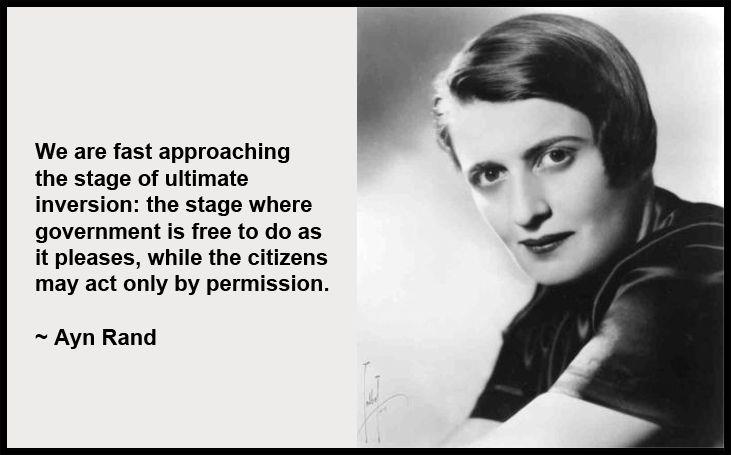
Is Ayn Rand’s “Ultimate Inversion” Prediction Coming True?

In light of the fact that five pinheads on the Supreme Court has said that government can compel you to do or buy virtually anything and call it a tax and government is now shutting down kid’s lemonade stands and church picnics for not having “proper food licensing”;  this picture hits close to home.

Ayn Rand Ultimate Inversion

In A World Where Marriage Is Redefined Religious Freedom Does Not Survive (video)

This will probably have to go to the US Supreme Court. The First Amendment is clear on this and so is federal case law. One of the problems with State Judges is that many of them are appointed because they made contributions and thus they are political hacks, not legal minds. The 14th Amendment binds the Bill of Rights to the states. Every lawyer knows this, but so far these judges in New Mexico just don’t care.

Obama Administration repeats same line on bad employment numbers—for 30 months of bad reports!

This is an outstanding piece of journalism form Chris Moody at Yahoo News. I love it when the reporter isn’t lazy and actually does the homework. Nice work Chris. (Another reason why I use Yahoo and try to avoid Google.)

Yahoo News:

When the Bureau of Labor Statistics announced the nation’s latest national employment figures Friday, the Obama administration stressed that people should not “read too much” into the data.

Mitt Romney’s campaign pounced, and flagged the fact that the White House has repeated that same line nearly every month since November 2009.

See below for the roundup of articles from WhiteHouse.gov that Romney’s campaign posted on its site. In many of the posts, the authors for the administration do acknowledge that they repeat themselves:

June 2012: “Therefore, it is important not to read too much into any one monthly report and it is informative to consider each report in the context of other data that are becoming available.” (LINK: http://www.whitehouse.gov/blog/2012/07/06/employment-situation-june)

May 2012: “Therefore, it is important not to read too much into any one monthly report and it is helpful to consider each report in the context of other data that are becoming available.” (LINK: http://www.whitehouse.gov/blog/2012/06/01/employment-situation-may)

April 2012: “Therefore, it is important not to read too much into any one monthly report and it is helpful to consider each report in the context of other data that are becoming available.” (LINK: http://www.whitehouse.gov/blog/2012/05/04/employment-situation-april)

March 2012: “Therefore, it is important not to read too much into any one monthly report, and it is helpful to consider each report in the context of other data that are becoming available.” (LINK: http://www.whitehouse.gov/blog/2012/04/06/employment-situation-march)

February 2012: “Therefore, as the Administration always stresses, it is important not to read too much into any one monthly report; nevertheless, the trend in job market indicators over recent months is an encouraging sign.” (LINK: http://www.whitehouse.gov/blog/2012/03/09/employment-situation-february)

January 2012: “Therefore, as the Administration always stresses, it is important not to read too much into any one monthly report; nevertheless, the trend in job market indicators over recent months is an encouraging sign.” (LINK: http://www.whitehouse.gov/blog/2012/02/03/employment-situation-january)

December 2011: “Therefore, as the Administration always stresses, it is important not to read too much into any one monthly report.” (LINK: http://www.whitehouse.gov/blog/2012/01/06/employment-situation-december)

November 2011: “Therefore, as the Administration always stresses, it is important not to read too much into any one monthly report.” (LINK: http://www.whitehouse.gov/blog/2011/12/02/employment-situation-november)

October 2011: “The monthly employment and unemployment numbers are volatile and employment estimates are subject to substantial revision. There is no better example than August’s jobs figure, which was initially reported at zero and in the latest revision increased to 104,000. This illustrates why the Administration always stresses it is important not to read too much into any one monthly report.” (LINK: http://www.whitehouse.gov/blog/2011/11/04/employment-situation-october)

September 2011: “Therefore, as the Administration always stresses, it is important not to read too much into any one monthly report.” (LINK: http://www.whitehouse.gov/blog/2011/10/07/employment-situation-september)

August 2011: “Therefore, as the Administration always stresses, it is important not to read too much into any one monthly report.” (LINK: http://www.whitehouse.gov/blog/2011/09/02/employment-situation-august)

July 2011: “Therefore, as the Administration always stresses, it is important not to read too much into any one monthly report.” (LINK: http://www.whitehouse.gov/blog/2011/08/05/employment-situation-july)

June 2011: “Therefore, as the Administration always stresses, it is important not to read too much into any one monthly report.” (LINK: http://www.whitehouse.gov/blog/2011/07/08/employment-situation-june)

May 2011: “Therefore, as the Administration always stresses, it is important not to read too much into any one monthly report.” (LINK: http://www.whitehouse.gov/blog/2011/06/03/employment-situation-may)

April 2011: “Therefore, as the Administration always stresses, it is important not to read too much into any one monthly report.” (LINK: http://www.whitehouse.gov/blog/2011/05/06/employment-situation-april)

March 2011: “Therefore, as the Administration always stresses, it is important not to read too much into any one monthly report.” (LINK: http://www.whitehouse.gov/blog/2011/04/01/employment-situation-march)

February 2011: “Therefore, as the Administration always stresses, it is important not to read too much into any one monthly report.” (LINK: http://www.whitehouse.gov/blog/2011/03/04/employment-situation-february)

January 2011: “Therefore, as the Administration always stresses, it is important not to read too much into any one monthly report.” (LINK: http://www.whitehouse.gov/blog/2011/02/04/employment-situation-january)

December 2010: “Therefore, as the Administration always stresses, it is important not to read too much into any one monthly report.” (LINK: http://www.whitehouse.gov/blog/2011/01/07/employment-situation-december)

November 2010: “Therefore, as the Administration always stresses, it is important not to read too much into any one monthly report.” (LINK: http://www.whitehouse.gov/blog/2010/12/03/employment-situation-november)

October 2010: “Given the volatility in monthly employment and unemployment data, it is important not to read too much into any one monthly report.” (LINK: http://www.whitehouse.gov/blog/2010/11/05/employment-situation-october)

September 2010: “Given the volatility in the monthly employment and unemployment data, it is important not to read too much into any one monthly report.” (LINK: http://www.whitehouse.gov/blog/2010/10/08/employment-situation-september)

July 2010: “Therefore, it is important not to read too much into any one monthly report, positive or negative.  It is essential that we continue our efforts to move in the right direction and replace job losses with robust job gains.” (LINK: http://www.whitehouse.gov/blog/2010/08/06/employment-situation-july)

August 2010: “Therefore, it is important not to read too much into any one monthly report, positive or negative.” (LINK: http://www.whitehouse.gov/blog/2010/09/03/employment-situation-august)

June 2010: “As always, it is important not to read too much into any one monthly report, positive or negative.” (LINK: http://www.whitehouse.gov/blog/2010/07/02/employment-situation-june)

May 2010: “As always, it is important not to read too much into any one monthly report, positive or negative.” (LINK: http://www.whitehouse.gov/blog/2010/06/04/employment-situation-may)

April 2010: “Therefore, it is important not to read too much into any one monthly report, positive or negative.” (LINK: http://www.whitehouse.gov/blog/2010/05/07/employment-situation-april)

March 2010: “Therefore, it is important not to read too much into any one monthly report, positive or negative.” (LINK: http://www.whitehouse.gov/blog/2010/04/02/employment-situation-march)

January 2010: “Therefore, it is important not to read too much into any one monthly report, positive or negative.” (LINK: http://www.whitehouse.gov/blog/2010/02/05/employment-situation-january)

November 2009: “Therefore, it is important not to read too much into any one monthly report, positive or negative.” (LINK: http://www.whitehouse.gov/blog/2009/12/04/employment-situation-november)

The Hill Poll: Majority of voters believe Obama has changed country for worse

The Hill:

Two-thirds of likely voters say President Obama has kept his 2008 campaign promise to change America — but it’s changed for the worse, according to a sizable majority.

A new poll for The Hill found 56 percent of likely voters believe Obama’s first term has transformed the nation in a negative way, compared to 35 percent who believe the country has changed for the better under his leadership.

The results signal broad voter unease with the direction the nation has taken under Obama’s leadership and present a major challenge for the incumbent Democrat as he seeks reelection this fall.

Conducted for The Hill by Pulse Opinion Research, the poll comes in the wake of last month’s Supreme Court decision that upheld the primary elements of Obama’s signature healthcare legislation.

It found 68 percent of likely voters — regardless of whether they approve or disapprove of Obama — believe the president has substantially transformed the country since his 2009 inauguration.

Obama’s Transportation Secretary Wants Us to Be Like Communist China

President Obama’s former Communications Director Anita Dunn said that Mao (the largest communist mass murderer in world history) was the philosopher she looked to most. Former Green jobs Czar Van Jones is a self admitted communist revolutionary and the list goes on…

Heritage:

China’s attempt at a high-speed rail network is fraught with corrupt officials, impossible costs, and deadly safety failures. But U.S. Transportation Secretary Ray LaHood wishes America would follow it as a model.

LaHood told The Cable last week:

The Chinese are more successful [in building infrastructure] because in their country, only three people make the decision. In our country, 3,000 people do, 3 million. In a country where only three people make the decision, they can decide where to put their rail line, get the money, and do it. We don’t do it that way in America.

His comments are stunning. Yes, that’s how Communists do it: A few people make decisions for the country and control the money, land, resources, and workers. And how has that worked out?

“Rather than demonstrating the advantages of centrally planned long-term investment, as its foreign admirers sometimes suggested, China’s bullet-train experience shows what can go wrong when an unelected elite, influenced by corrupt opportunists, gives orders that all must follow — without the robust public discussion we would have in the states.” That sounds like a direct rebuttal to LaHood, but Washington Post editorial writer Charles Lane wrote that back in April 2011.

The Telegraph (U.K.) reported in February that 70 percent of China’s railway projects had been suspended, as its railways ministry attempted to continue deficit financing while facing slow ticket sales. Last year, a deadly train crash brought safety concerns and corruption at the highest levels of the railway to light.

The bottom line is that high-speed rail is like pouring money down a hole. China’s official institutions aren’t known for transparency, but according to the Voice of America, “Even the [Chinese] national research institution, the Academy of Science, reported last year that at current investment and estimated passenger numbers, the trains will never collect enough in fares to repay construction loans.”

LaHood—and President Obama—advocate high-speed rail in America by evoking the image of thousands of workers on the project. It’s part of their stimulus-funded plan to get America back to work. But once again, China’s experience demonstrates that government spending on infrastructure has not helped the Chinese economy.

TSA Agents at Louisville Airport Call Deaf Man “Fucking Deafie”, Steal His Candy and Eat It In Front of Him.

And now the victim has pulled his blog down because he fears retaliation. And he is right to fear it.

Reason Magazine:

A group of students leaving the annual conference of the National Association of the Deaf in Louisville had a rather awful experience courtesy of the Transportation Security Administration in that city’s airport. One of the travelers wrote about it on his blog:

It was a very public week-long event downtown, make no bones about it. As such, the shirt very clearly identified me as deaf.

While I was going through the TSA, some of them started laughing in my direction. I thought it might’ve been someone behind me, but I found out otherwise.

They went through my bag (for no reason), and found a couple bags of candy I brought. I was told I wasn’t allowed to fly with that (wtf? I’ve flown with food before — these were even sealed still because I brought them right in the airport). I was then asked if I would like to donate the candy “To the USO”. Since I know the airport there has an Air National Guard base, and I figured it would go to the soldiers, I (annoyed) said sure, why not?

The guards, as I was getting scanned, started eating the candy they just told me was for the soldiers. In front of me, still laughing at me (very clearly now). One of them asked why they were laughing, and one of them came up to me, pointed at my shirt, laughed at me and said, “Fucking deafie”. The Louisville TSA called me a “fucking deafie” and laughed at me because I was deaf, and they expected wouldn’t say anything back (or wouldn’t hear them). Make no bones about it — she was facing me and I read her lips. There was no mistake. I would later find out that they had called at least 4 other individuals the same thing.

Governor Rick Perry tells Chief Obamacare Bureaucrat where to put ObamaCare…

If you didn’t vote for Rick Perry you may wish you had after reading his awesome letter to ObamaCare Chief Bureaucrat Kathleen Sebelius. Get ready to start cheering and enjoy the letter below!

Texas Governor Rick Perry

http://governor.state.tx.us/files/press-office/O-SebeliusKathleen201207090024.pdf

Unemployment dropped in every state the elected a Republican Governor in 2010

Via Breitbart News and Examiner.com:

In 2010, influenced by the Tea Party and its focus on fiscal issues, 17 states elected Republican governors. And, according to an Examiner.com analysis, every one of those states saw a drop in their unemployment rates since January of 2011. Furthermore, the average drop in the unemployment rate in these states was 1.35%, compared to the national decline of .9%, which means, according to the analysis, that the job market in these Republican states is improving 50% faster than the national rate.

Since January of 2011, here is how much the unemployment rate declined in each of the 17 states that elected Republican governors in 2010, according to the Examiner:

Kansas – 6.9% to 6.1% = a decline of 0.8%

Maine – 8.0% to 7.4% = a decline of 0.6%

Michigan – 10.9% to 8.5% = a decline of 2.4%

New Mexico – 7.7% to 6.7% = a decline of 1.0%

Oklahoma – 6.2% to 4.8% = a decline of 1.4%

Pennsylvania – 8.0% to 7.4% = a decline of 0.6%

Tennessee – 9.5% to 7.9% = a decline of 1.6%

Wisconsin – 7.7% to 6.8% = a decline of 0.9%

Wyoming – 6.3% to 5.2% = a decline of 1.1%

Alabama – 9.3% to 7.4% = a decline of 1.9%

Georgia – 10.1% to 8.9% = a decline of 1.2%

South Carolina – 10.6% to 9.1% = a decline of 1.5%

South Dakota – 5.0% to 4.3% = a decline of 0.7%

Florida – 10.9% to 8.6% = a decline of 2.3%

Nevada – 13.8% to 11.6% = a decline of 2.2%

Iowa – 6.1% to 5.1% = a decline of 1.0%

Ohio – 9.0% to 7.3% = a decline of 1.7%

On the other hand, the unemployment rate in states that elected Democrats in 2010 dropped, on average, as much as the national rate decline and, in some states such as New York, the unemployment rate has risen since January of 2011.

Americans Making Over $50,000 a Year Paid 93.3 % of All Taxes in 2010

Always keep in mind the difference between the productive middle class, the rich and the super rich – LINKLINKLINKLINK. The Democrat leadership makes like there is no difference for reasons you will discover in that list of links.

CNS News:

Americans making over $50,000 paid most of the federal taxes that were paid in the U.S. in 2010.

According to statistics compiled from the Internal Revenue Service (IRS) by the Tax Foundation, those people making above $50,000 had an effective tax rate of 14.1 percent, and carried 93.3 percent of the total tax burden.

In contrast, Americans making less than $50,000 had an effective tax rate of 3.5 percent and their total share of the tax burden was just 6.7 percent.

Americans making more than $250,000 had an effective tax rate of 23.4 percent and their total share of the tax burden was 45.7 percent.

Out of the 143 million tax returns that were filed with the IRS in 2010, 58 million – or 41 percent – of those filers were non-payers.

In other words, only 85 million actually paid taxes.

But Tax Foundation data also shows that people who didn’t pay any income tax received $105 billion in refundable tax credits from the IRS.

Additionally, statistics from the Tax Foundation shows that the federal tax code is 3.8 million words long – 3.5 times longer than all seven books of J.K. Rowling’s famous Harry Potter series combined.

According to Scholastic.com, the total word count of all seven Harry Potter books is 1,083,594 words with Harry Potter and the Sorcerer’s Stone being the shortest (76,944 words) and Harry Potter and the Order of the Phoenix the longest (257,045).

In contrast, the federal tax code is 3.8 million words, almost a tripling of its size since 2001 when the Joint Committee on Taxation estimated the tax code to be 1,395,000, and almost doubling its size since the Tax Foundation’s estimates in 2001.

Top Global Warming Alarmist Scientist Admits: I Made a Mistake

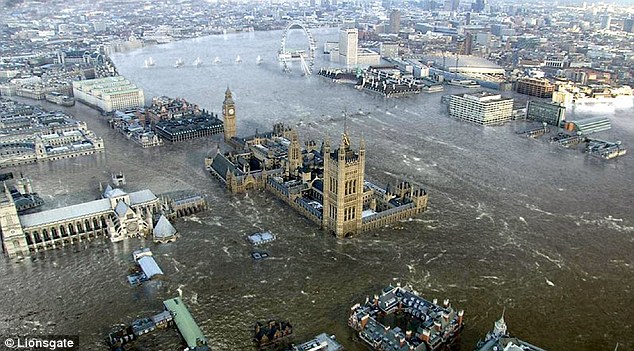
Lovelock alarmism flood
Lovelock had previously claimed London would be threatened by rising sea levels by 2040

UK Daily Mail:

…and Al Gore is Guilty of exaggerating his arguments..

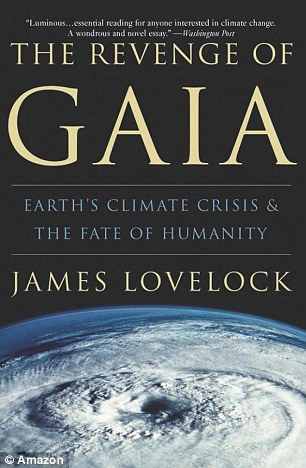
Environmental scientist James Lovelock, renowned for his terrifying predictions of climate change’s deadly impact on the planet, has gone back on his previous claims, admitting they were ‘alarmist’.

The 92-year-old Briton, who also developed the Gaia theory of the Earth as a single organism, has said climate change is still happening – just not as quickly as he once warned.

He added that other environmental commentators, such as former vice president Al Gore, are also guilty of exaggerating their arguments.

The admission comes as a devastating blow to proponents of climate change who regard Lovelock as a powerful figurehead.

Five years ago, he had claimed: ‘Before this century is over billions of us will die and the few breeding pairs of people that survive will be in the Arctic where the climate remains tolerable.’

But in an interview with msnbc.com, he admitted: ‘I made a mistake.’

He said: ‘The problem is we don’t know what the climate is doing,’ he told ‘We thought we knew 20 years ago. That led to some alarmist books – mine included – because it looked clear cut, but it hasn’t happened.

ObamaCare creates 13,000 pages of new regulations and they aren’t done yet…

And some people are still foolish enough to believe that adding such a bureaucratic overhead will eventually lower healthcare costs and premiums, of course the CBO and the Medicare Actuary have already said that ObamaCare makes the problem worse.

Jim Angle:

With the Supreme Court giving President Obama’s new health care law a green light, federal and state officials are turning to implementation of the law — a lengthy and massive undertaking still in its early stages, but already costing money and expanding the government.

The Health and Human Services Department “was given a billion dollars implementation money,” Republican Rep. Denny Rehberg of Montana said. “That money is gone already on additional bureaucrats and IT programs, computerization for the implementation.”

“Oh boy,” Stan Dorn of the Urban Institute said. “HHS has a huge amount of work to do and the states do, too. There will be new health insurance marketplaces in every state in the country, places you can go online, compare health plans.”

The IRS, Health and Human Services and many other agencies will now write thousands of pages of regulations — an effort well under way:

“There’s already 13,000 pages of regulations, and they’re not even done yet,” Rehberg said.

“It’s a delegation of extensive authority from Congress to the Department of Health and Human Services and a lot of boards and commissions and bureaus throughout the bureaucracy,” Matt Spalding of the Heritage Foundation said. “We counted about 180 or so.”

There has been much focus on the mandate that all Americans obtain health insurance, but analysts say that’s just a small part of the law — covering only a few pages out of the law’s 2700.

“The fact of the matter is the mandate is about two percent of the whole piece of the legislation,” Spalding said. “It’s a minor part.”

Much bigger than the mandate itself are the insurance exchanges that will administer $681 billion in subsidies over 10 years, which will require a lot of new federal workers at the IRS and health department.

“They are asking for several hundred new employees,” Dorn said. “You have rules you need to write and you need lawyers, so there are lots of things you need to do when you are standing up a new enterprise.”

For some, though, the bottom line is clear and troubling: The federal government is about to assume massive new powers.

According to James Capretta of the Ethics and Public Policy Center, federal powers will include designing insurance plans, telling people where they can go for coverage and how much insurers are allowed to charge.

“Really, how doctors and hospitals are supposed to practice medicine,” he said.

Read more HERE.


MUST SEE: ObamaCare’s Impact on YOU (video)

You know that the elite media in the United States has failed us when Russia Today (AKA “RT”) – the mouthpiece for Vladimir Putin – gives the best analysis I have yet seen on a major network (granted RT isn’t huge in the United States, but around the world it is). Russia Today not only explains why the Roberts ruling is preposterous as a matter of law, and then explains several of the economic consequences of ObamaCare. This very writer has called out Russia Today as a mouthpiece for Putin before, but with that said, in this segment Russia Today displays one of the finest pieces of television journalism I have ever seen.

Russia Today has an agenda of showing the United States as authoritarian, silly, corrupt, willing to break its own laws, and anything but small government. Russia Today doesn’t have to make it up any more with the Obama Administration because all they have to do is highlight and accurately cover the stories the elite media will not to accomplish Putin’s goals.

Our friend Samantha Frederickson has a GREAT post explaining the consequences of ObamaCare that will impact you after the clip from Russia Today below. Start the video at the 2:00 mark:

Now consider this — the PPACA sets forth a “fine” (tax) of $2,000 per employee for a business that has 50 or more and does not provide “at least” the minimum “insurance” to all.

There is no health care plan I’m aware of that a business can buy today that costs less than $2,000 per employee per year, and which also meets the requirements in the law.  None.  That was almost impossible to meet back in 1995 for a healthy, 18 year old insured single male.  It’s flatly impossible now and it’s doubly-so if your workforce has other than 18-year old single, healthy males in it.  I know this to be factual because I was responsible for buying it for our employees as a CEO of a company.

Therefore the incentive is for all businesses to drop health care.

Period.

Second, your choice is to either (1) buy and have said plan (whether through employment or individually) or pay a “fine” (tax) of 1% of income (increasing to 2.5% of AGI in 2016.)  The minimum “fine” is $95 starting in 2013, rising to $695 in 2016.  The average family income is about $50,000/year, which means that the fine (tax) will be $1,250 in 2016.  It’s less now.

You cannot buy health insurance at their “minimum level” for anything approaching $1,250 a year no matter how healthy you are at any age. 

The law prohibits insurance companies from charging you more if you’re sick, or refusing to cover you at all.  They must accept everyone on equal terms.

Therefore:

  • Businesses will drop coverage; it’s cheaper (by far) for them to pay the fine and, for those under 133% of the federal poverty level, those employees can go onto Medicaid.  This is a “family of four” income of $31,900 (as of today; it will go up of course.)  That’s roughly the second quintile.
  • Individuals will drop coverage and pay the fine, since it’s far cheaper than to buy the “insurance.”

Both will buy the “insurance” only when they get sick, since they cannot be upcharged.

The cost of “insurance” will thus skyrocket to 10x or more what it costs now, just as it would if you bought auto insurance only after you wrecked or homeowners insurance only after you had a fire.

At the higher price nobody will be able to afford to buy the insurance at all, since that will be indistinguishable from just paying for whatever is wrong with you, plus the insurance company markup.

In very short order the entire medical system and health insurance scheme will collapse, leaving only two choices — either a return to free market principles (including all I’ve argued for since this debate began) or a single-payer, fully-socialized system ala Canada.

You can bet the government will continue to try to change the terms of the deal — including ramping up the tax/fine and other games, to prevent this outcome, but they will fail.

Now the question becomes this:

Which Presidential political candidates have told you the above, and what are their answers to this dilemma?

Let’s go down the list.

  • We know what Obama’s is — he passed it.  You will lose your private health care under Obama.  Period.  We are headed for a fully-socialized medical system and a collapse of the current medical paradigm under Obama.
  • We know what Gary Johnson’s position is — he wants to “block grant” all Medicare and Medicaid to the states, cut the amount of money in the budget (all line items) 43% and repeal Obamacare (including the mandate.)  But he refuses to demand an end to the cost-shifting where Juanita the illegal Mexican immigrant who is 7-1/2 months pregnant while drug and alcohol dependent shows up in the hospital, in labor, and foists off a $2.5 million NICU and birth expense bill on you!  He also refuses to stop the drug companies from effectively forcing Americans to bear the cost of all drug and device development and he has refused to put a stop to differential billing.  The latter two only exist because of explicit federal laws that make lawful in the health industry market behaviors that are illegal in virtually every other line of work (see The Sherman Act, The Clayton Act, and Robinson-Patman for starters.)  All of these facts are why the costs are ramping in the first place, which means his plan will simply force the States into bankruptcy and continue screwing you at the same time.
  • We don’t know what Romney’s plan is in detail.  He’s been oddly silent in that regard.  He says “Obamacare is not the answer” but he passed it as Governor on a state basis!  He too advocates nothing to put a stop to the cost-shifting and anti-competitive acts of drug and device makers nor hospitals and other medical providers.  He too wants to block grant Medicaid but that does nothing to address the problem and will simply bankrupt the state budgets (as noted for Johnson.)   Conspicuously absent from Romney’s plan (as is true for Johnson) is (1) a repeal of EMTALA, (2) a demand for level, consistent pricing irrespective of how one pays for a service (3) and a demand to remove anti-competitive laws protecting differential billing across state and national boundaries (e.g. Viagra for $2 in Canada .vs. $20 here) so that Americans are not forced to subsdize everyone else in the world and you pay the same price as the guy next to you in the hospital for the same product or service, instead of 2x, 3x, 5x, or even 100x as much.

So we have three Presidential candidates, none of which will do a damn thing to fix what’s wrong with health care.  All three are promoting a path that will bankrupt the States, bankrupt the Federal Government, bankrupt you or all three.

All three are promoting mathematical impossibilities.  All three are protecting monopolistic behavior and refusing to address specific laws that were passed to protect that behavior and special government-granted privilege; without those protections that monopolistic behavior would immediately collapse.

And worse, none of them has proposed a damn thing to deal with what the Supreme Court just did, which is grant a permanent ability to the Federal Government to compel any behavior by linking it to a tax.  Some examples of where this can (and might in the near future!) go include:

  • You make cars.  You’re told to sell a car to anyone who makes under $25,000 a year for $5,000.  This is of course under your cost of production.  If you refuse, every car you make is subject to a $5,000 tax.  This is now Constitutional, as of this last week.
  • You would like to have three kids.  The government decides that you may have only two.  If you have get pregnant with a third and refuse to have an abortion you must pay $10,000 a year in additional tax forever.  This is now Constitutional, as of last week.
  • You may have all the abortions you want, but each costs $10,000 in tax.  This is Constitutional, as of last week.
  • You must eat Broccoli and submit receipts with your 1040 proving you bought 1lb of Broccoli per person in your household per week.  If you do not, you must pay $5,000 in additional tax.  This is Constitutional, as of last week.
  • If you are more than 10lbs overweight you must pay $2,000 of additional tax for every 10lbs overweight you are, with no cap.  This is Constitutional, as of last week.

You probably think I’m kidding on this.  I’m not.  This is what the Roberts Court held.  There is literally nothing that Congress cannot mandate that you do, or not do, under penalty of paying a tax.  All that was unconstitutional before the ruling now is explicitly constitutional if the only “compulsion” to do (or not do) a given thing is that you will be taxed if you refuse.  The court promised to review “reasonableness” of any such taxes in the future, but note that at the same time the court ignored two other problems with the Health Care law, making a lie of their claim of “future reasonableness” tests right up front:

  • Direct taxes are unconstitutional without being apportioned.  This is clearly a direct tax and it is not apportioned.  It is therefore unconstitutional, but the USSC simply ignored this. (The 16th Amendment was required to make income taxes constitutional for this reason.)
  • The Anti-Injunction Act prohibits suing the government over a tax until you have actually paid it.  This means that if the PPACA “penalty” is a tax then the entire lawsuit that went to the USSC is moot as it’s not yet “ripe” (since nobody has yet paid the tax.)  If they were going to find that this was a tax they were thus bound to dismiss the entire complaint as unripe.  They ignored that too.

In short the USSC has become no more legitimate than the North Korean government and is unworthy of your respect.

Prof. Paul Moreno: A Short History of Congress’s Power to Tax

The case against Roberts’ preposterous ruling just keeps building.

Law Professor Paul Moreno:

The Supreme Court has long distinguished the regulatory from the taxing power.

In 1935, Secretary of Labor Frances Perkins was fretting about finding a constitutional basis for the Social Security Act. Supreme Court Justice Harlan Fiske Stone advised her, “The taxing power, my dear, the taxing power. You can do anything under the taxing power.”

Last week, in his ObamaCare opinion, NFIB v. Sebelius, Chief Justice John Roberts gave Congress the same advice—just enact regulatory legislation and tack on a financial penalty, as in failure to comply with the individual insurance mandate. So how did the power to tax under the Constitution become unbounded?

The first enumerated power that the Constitution grants to Congress is the “power to lay and collect taxes, duties, imposts, and excises, to pay the debts and provide for the common defense and general welfare of the United States.” The text indicates that the taxing power is not plenary, but can be used only for defined ends and objects—since a comma, not a semicolon, separated the clauses on means (taxes) and ends (debts, defense, welfare).

This punctuation was no small matter. In 1798, Pennsylvania Rep. Albert Gallatin said that fellow Pennsylvania Rep. Gouverneur Morris, chairman of the Committee on Style at the Constitutional Convention, had smuggled in the semicolon in order to make Congress’s taxing power limitless, but that the alert Roger Sherman had the comma restored. The altered punctuation, Gallatin said, would have turned “words [that] had originally been inserted in the Constitution as a limitation to the power of levying taxes” into “a distinct power.” Thirty years later, Virginia Rep. Mark Alexander accused Secretary of State John Quincy Adams of doing the same thing after Congress instructed the administration to print copies of the Constitution.

The punctuation debate simply reinforced James Madison’s point in Federalist No. 41 that Congress could tax and spend only for those objects enumerated, primarily in Article I, Section 8.

Congress enacted very few taxes up to the end of the Civil War, and none that was a pretext for regulating things that the Constitution gave it no power to regulate. True, the purpose of tariffs was to protect domestic industry from foreign competition, not raise revenue. But the Constitution grants Congress a plenary power to regulate commerce with other nations.

Congress also enacted a tax to destroy state bank notes in 1866, but this could be seen as a “necessary and proper” means to stop the states from usurping Congress’s monetary or currency power. It was upheld in Veazie Bank v. Fenno (1869).

The first unabashed use of the taxing power for regulatory purposes came when Congress enacted a tax on “oleomargarine” in 1886. Dairy farmers tried to drive this cheaper butter substitute from the market but could only get Congress to adopt a mild tax, based on the claim that margarine was often artificially colored and fraudulently sold as butter. President Grover Cleveland reluctantly signed the bill, saying that if he were convinced the revenue aspect was simply a pretext “to destroy . . . one industry of our people for the protection and benefit of another,” he would have vetoed it.

Congress imposed another tax on margarine in 1902, which the Supreme Court upheld (U.S. v. McCray, 1904). Three justices dissented, but without writing an opinion.

Then, in 1914, Congress imposed taxes on druggists’ sales of opiates as a way to regulate their use. Five years later, in U.S. v. Doremus , the Supreme Court upheld the levy under Congress’s express power to impose excise taxes.

Then, in 1922, the court rejected Congress’s attempt to prohibit child labor by imposing a tax on companies that employed children. An earlier attempt to accomplish this, by prohibiting the interstate shipment of goods made by child labor, was struck down as unconstitutional—since it was understood since the earliest days of the republic that Congress had the power to regulate commerce but not manufacturing. “A Court must be blind not to see that the so-called tax is imposed to stop the employment of children within the age limits prescribed,” Chief Justice William Howard Taft wrote in Bailey v. Drexel Furniture Co. “Its prohibitory and regulatory effect and purpose are palpable.” Even liberal justices Oliver Wendell Holmes and Louis D. Brandeis concurred in Taft’s opinion.

Things came to a head in the New Deal, when Congress imposed a tax on food and fiber processors and used those tax dollars to provide benefits to farmers. Though in U.S. v. Butler (1936) the court adopted a more expansive view of the taxing power—allowing Congress to tax and spend for the “general welfare” beyond the powers specifically enumerated in the Constitution—it still held the ends had to be “general” and not transfer payments from one group to another. After President Franklin D. Roosevelt threatened to “pack” the Supreme Court in 1937, it accepted such transfer payments in Mulford v. Smith (1939), so long as the taxes were paid into the general treasury and not earmarked for farmers.

And now, in 2012, Justice Roberts has confirmed that there are no limits to regulatory taxation as long as the revenue is deposited in the U.S. Treasury.

Are there any other limits? Article I, Section 2 says that “direct taxes shall be apportioned among the states” according to population. This is repeated in Article I, Section 9, which says that “no capitation, or other direct tax, shall be laid,” unless apportioned.

The Supreme Court struck down income taxes in 1895 (Pollock v. Farmers’ Loan & Trust Co.), on the ground that they were “direct” taxes but not apportioned by population. Apportioning an income tax would defeat the purpose of the relatively poorer Southern and Western states, who wanted the relatively richer states of the Northeast to pay the bulk of the tax. The 16th Amendment gave Congress the power to tax incomes without apportionment.

Other direct taxes should presumably have to be apportioned according to the Constitution. Justice Roberts quickly dismissed the notion that the individual mandate penalty-tax is not a direct tax “under this Court’s precedents.” To any sentient adult, it looks like a “capitation” or head tax, imposed upon individuals directly. Unfortunately, having plenty of other reasons to object to ObamaCare, the four dissenting justices in NFIB v. Sebelius did not explore this point.

Some conservatives have cheered that part of Justice Roberts’s decision that limits Congress’s Commerce Clause power. But an unlimited taxing power is equally dangerous to constitutional government.

Mr. Moreno is a professor of history at Hillsdale College and the author of “The American State from the Civil War to the New Deal,”

Mark Steyn: A lie makes Obamacare legal

Mark Steyn:

Three months ago, I quoted George Jonas on the 30th anniversary of Canada’s ghastly “Charter of Rights and Freedoms”: “There seems to be an inverse relationship between written instruments of freedom, such as a Charter, and freedom itself,” wrote Jonas. “It’s as if freedom were too fragile to be put into words: If you write down your rights and freedoms, you lose them.”

For longer than one might have expected, the U.S. Constitution was a happy exception to that general rule – until, that is, the contortions required to reconcile a republic of limited government with the ambitions of statism rendered U.S. constitutionalism increasingly absurd. As I also wrote three months ago (yes, yes, don’t worry, there’s a couple of sentences of new material in amongst all the I-told-you-so stuff), “The United States is the only Western nation in which our rulers invoke the Constitution for the purpose of overriding it – or, at any rate, torturing its language beyond repair.”

Thus, the Supreme Court’s Obamacare decision. No one could seriously argue that the Framers’ vision of the Constitution intended to provide philosophical license for a national government (“federal” hardly seems le mot juste) whose treasury could fine you for declining to make provision for a chest infection that meets the approval of the Commissar of Ailments. Yet on Thursday, Chief Justice John Roberts did just that. And conservatives are supposed to be encouraged that he did so by appeal to the Constitution’s taxing authority rather than by a massive expansion of the Commerce Clause. Indeed, several respected commentators portrayed the Chief Justice’s majority vote as a finely calibrated act of constitutional seemliness.

Great. That and $4.95 will get you a decaf macchiato in the Supreme Court snack bar. There’s nothing constitutionally seemly about a court decision that says this law is only legal because the people’s representatives flat-out lied to the people when they passed it. Throughout the Obamacare debates, Democrats explicitly denied it was a massive tax hike: “You reject that it’s a tax increase?” George Stephanopoulos demanded to know on ABC. “I absolutely reject that notion,” replied the President. Yet “that notion” is the only one that would fly at the Supreme Court. The jurists found the individual mandate constitutional by declining to recognize it as a mandate at all. For Roberts’ defenders on the right, this is apparently a daring rout of Big Government: Like Nelson contemplating the Danish fleet at the Battle of Copenhagen, the Chief Justice held the telescope to his blind eye and declared, “I see no ships.”

If it looks like a duck, quacks like a duck, but a handful of judges rule that it’s a rare breed of elk, then all’s well. The Chief Justice, on the other hand, looks, quacks and walks like the Queen in Alice In Wonderland: “Sentence first – verdict afterwards.” The Obama administration sentences you to a $695 fine, and a couple of years later the queens of the Supreme Court explain what it is you’re guilty of. A. V. Dicey’s famous antipathy to written constitutions and preference for what he called (in a then-largely unfamiliar coinage) the “rule of law” has never looked better.

Instead, constitutionalists argue that Chief Justice Roberts has won a Nelson-like victory over the ever-expanding Commerce Clause. Big deal – for is his new, approved, enhanced taxing power not equally expandable? And, in attempting to pass off a confiscatory penalty as a legitimate tax, Roberts inflicts damage on the most basic legal principles.

Bingo on that last line. To read the rest of Mark Steyn’s excellent column click HERE.

Seven Truths About Politicians

It is pieces like this that make me regret that I do not have much time to write original pieces anymore. In this piece John Hawkins gives us an all important reminder of what those of us who are politically aware often take for granted.

John Hawkins:

1) The first priority of a politician is always getting re-elected: As Thomas Sowell has noted,

“No one will really understand politics until they understand that politicians are not trying to solve our problems. They are trying to solve their own problems — of which getting elected and re-elected are number one and number two. Whatever is number three is far behind.”

Politicians may care about sticking to the Constitution, doing what’s right for the country, and keeping their promises, but all of those issues pale in importance to staying employed in their cushy jobs.

2) Most politicians care far more about the opinions of interest groups than their constituents: Because of gerrymandering and America’s partisan fault lines, even under the worst of circumstances, 75% of the politicians in Congress are in no danger of losing their seats to a candidate of the opposing party. Furthermore, because of their advantages in name recognition, fund raising, and the fealty of other local politicians to someone they view as a likely winner, most challengers from the same party have little hope of unseating an incumbent either.

The only way that changes is if an incumbent infuriates an interest group on his own side that has the money and influence to help a challenger mount a credible campaign against him. That’s why politicians in non-competitive districts are far more afraid of groups like Freedomworks or the SEIU than their own constituents. Incumbents can — and often do, crap all over their own constituents without fear of losing their jobs. However, if they infuriate an interest group, they may end up in the unemployment line.

3) You shouldn’t ever take a politician at his word: People say they want a politician who’ll tell the truth. Unfortunately, that’s not true. What people actually want is a politician who’ll tell them what they want to hear and call that the truth. [Emphasis ours – Political Arena Editor] Partisans on both sides of the aisle have very little tolerance for politicians who deviate from accepted ideology; so the politicians get around that by lying. Most (but of course, not all) of the politicians championed by the Tea Party? They think the Tea Partiers are riff-raff, but useful riff-raff; so they cater to us. It’s no different on the Left. Most of the politicians who talk up the Occupy Movement think they’re damn, dirty hippies. They’re just useful damn, dirty hippies. That doesn’t mean no politician is ever “one of us,” but they are few and far between.

4) Most members of Congress aren’t particularly competent: On average, the politicians in Congress are generally well meaning, a little smarter than average, a lot more connected, and wealthy — but also considerably less ethical. Beyond that, they’re mostly just like a random subsection of a population. If you had a hundred random Americans in a room, a senator probably wouldn’t be the smartest person there, the person you’d want in charge, or even necessarily one of the more useful people to have around. In many respects, politicians are FAR LESS COMPETENT than the average person because so many of them led pampered, sheltered lives before they got into Congress and then have had their behinds kissed incessantly from the moment they got into power.

5) Members of Congress are out of touch: First off, even if members of Congress care about what their constituents think, they spend most of their time in D.C., not back home. Meanwhile, the median net worth of members of Congress is about $913,000. On top of that, members of Congress have staffers who do everything for them and treat them like god-kings in the process. These aides schedule their lives, read everything for them and regurgitate back what they think they need, and incessantly tell them how wonderful they are. Most members of Congress have more in common with celebrities like Madonna or Barbra Streisand than they do with the teachers, factory workers, and small business owners who vote them into office.

6) Few of them will do anything to limit their own power: It doesn’t matter if you’re talking about big government liberals or small government conservatives, very, very few politicians are interested in doing anything that will limit their own power. That’s why term limits for Congress have never passed. It’s why the ethics rules in the House and Senate are a bad joke. It’s also a big part of the reason why government gets bigger, more expensive, and more powerful no matter who’s in charge. If you expect to reduce the concentration of power in D.C. by electing different politicians, then ultimately you’re going to find that you’re barking up the wrong tree.

7) Most politicians only do the right thing because they’re forced to do it: As the late, great Milton Friedman once said,

“I do not believe that the solution to our problem is simply to elect the right people. The important thing is to establish a political climate of opinion which will make it politically profitable for the wrong people to do the right thing. Unless it is politically profitable for the wrong people to do the right thing, the right people will not do the right thing either, or if they try, they will shortly be out of office.”

If you want to change how politicians behave, then you have to change public opinion, build structural limits into the system that force changes, or make politicians fear for their jobs. If people are hoping politicians will do the right thing, just because it is the right thing, then they’re hoping in vain.

Explanation of the ObamaCare Ruling for the Non-lawyer

Faust:

Again, if you’re confused, you’re not alone.  The mandate is not a tax when Roberts doesn’t want it to be and it is a tax when he wants it to be.  That’s confounding enough.  But what’s worse is that nowhere in the opinion does he state what of the three types of taxes the mandate is.

Folks you might notice that this is exactly what we said a few hours after the ruling came out LINK. To see part II of Faust’s excellent explanation of the ruling HERE – Editor


By Jason Faust Attorney at Law:

There were four issues presented for a ruling to the Supreme Court in the Obamacare case:

  1. Whether the Anti-Injunction Act precluded the Court from even hearing the case in the first place.
  2. Whether the individual mandate was a constitutional exercise of Congress’ power.
  3. Whether it was constitutional for the federal government to withhold all Medicaid funds from states which refused to comply with the ACA’s expansion of Medicaid.
  4. If any provision of the Affordable Care Act (ACA) was unconstitutional, could it be severed from the rest of the Act or must that make the entire Act unconstitutional?

Each issue will be analyzed separately.  This article will discuss the first two issues presented.  A soon-to-follow article will discuss the second two issues presented as well as a discussion of what this means in practical terms.

The Supreme Court ruled that the “penalty” in 26 U.S.C. Section 5000A (the individual mandate) is NOT a tax for purposes of the Anti-Injunction Act.

As the Supreme Court explained, “The Anti-Injunction Act provides that ‘no suit for the purpose of restraining the assessment or collection of any tax shall be maintained in any court by any person,’ 26 U. S. C. §7421(a), so that those subject to a tax must first pay it and then sue for a refund.”  In other words, one cannot sue to prevent the imposition of tax unless and until that tax has already been levied against an individual.  Only after the tax is levied and paid can an individual sue the government for a refund of the tax on the grounds that the tax is an invalid use of Congress’ taxing power.  So, if the so-called “Free-Rider” provision of the ACA is in fact a tax, then any challenges to it would be premature pursuant to the Anti-Injunction Act because the “tax” in the ACA would not be levied against anyone until 2014 (Section 5000A, which contains the penalty/tax provision, does not go into effect until 2014).  Therefore, any lawsuit would have been dismissed because the issue would not have been what is known as “ripe for adjudication” – that is, the plaintiff has not suffered harm or an injury and, consequently, has no standing to bring the suit (the issue of standing is explained in the next paragraph).  Thus, it was necessary to determine the issue of whether the individual mandate was a tax or a penalty because if it were a tax, the Supreme Court would never have had a chance to rule on the other issues presented in the lawsuit.

A little background regarding the types of cases the federal courts (including the Supreme Court) can hear is necessary to understanding why the ruling on the Anti-Injunction Act was necessary.  There are several requirements which must be met in order for a case to be heard in federal court.  Preliminarily, the party bringing the lawsuit must have what is known as “standing” (a requirement set forth in Article III, Section 2, Clause 1 of the United States Constitution).  In order to have standing: there must be what is called a “case on controversy” between the parties; the plaintiff must have been actually harmed or injured in some way; and the harm or injury suffered by the plaintiff must be capable of being redressed by the adjudication of the claims set forth in the lawsuit.  The purpose of having these requirements is to prevent the federal courts from rendering what are known as “advisory opinions,” that is, opinions on how a lawsuit would turn out if it were to be brought.  By limiting the cases which can be heard to cases in which the plaintiff meets these standing requirements, the number of cases heard in federal courts is reduced dramatically.  (If there were no standing requirements, anybody could theoretically sue anybody else for anything, regardless of whether they were even affected by it.)  The courts exist to settle disputes, so it makes sense there be an actual dispute before the court issues a ruling on the matter.

The Supreme Court (correctly, in my opinion) ruled that the individual mandate was NOT a tax for purposes of the Anti-Injunction Act.  Because the mandate was not a tax, the Anti-Injunction Act did not prevent the Supreme Court from hearing and ruling on the rest of the issues in the case.  This is the reason Part II of Roberts’ opinion (beginning on page nine) opens with the line, “[b]efore turning to the merits [of the case], we need to be sure we have the authority to do so.”  After discussing the arguments for and against the penalty provisions being considered a tax for the purposes of the Anti-Injunction Act, Roberts explained (and the court held), “the Affordable Care Act does not require that the penalty for failing to comply with the individual mandate be treated as a tax for purposes of the Anti-Injunction Act. The Anti-Injunction Act therefore does not apply to this suit, and we may proceed to the merits.”  It is extremely important to note here that Roberts specifically rejected the notion that because the penalty functions as a tax, it should be treated as such for purposes of the Anti-Injunction Act.  (It will become obvious why after reading Roberts’ decision on the constitutionality of the individual mandate).  The analysis literally turned on whether the ACA referred to the penalty as a tax.  Because it did not, the Court held the Anti-Injunction Act did not apply.

To sum up this section: The Anti-Injunction Act was found to be inapplicable because even though the Court said the penalty functions as a tax, it is not a tax for purposes of whether the Anti-Injunction Act applied because the ACA does not refer to the penalty as a tax.  Thus, the suit was able to proceed on the merits.

The Supreme Court Ruled that the “penalty” in 26 U.S.C. 5000A IS tax for purposes of whether the mandate is constitutional.

The most important yet illogical portion of the opinion involves the constitutionality of the individual mandate.  The individual mandate found in the ACA provides that every individual must either purchase health insurance or pay what the ACA calls a penalty.  The main argument set forth (by the government and most liberals) was that the mandate is constitutional under Congress’ power to regulate interstate commerce, which is found in Article I, Section 8, Clause 3 (also known as the “Commerce Clause”).  The Commerce Clause reads in its entirety: “[The Congress shall have Power] To regulate Commerce with foreign Nations, and among the several States, and with the Indian tribes.”  This clause has been used to promulgate all sorts of federal legislation because various Supreme Court decisions have held that Congress has the power to regulate virtually anything which, in the aggregate, has a substantial impact on interstate commerce.  Interstate commerce is exactly that: commerce that crosses state lines.  Because pretty much anything can be argued to affect interstate commerce, this power of Congress has gone largely unchecked.  In one absurdly backwards decision in the 1940s, the Supreme Court even went so far as to say that a farmer who grew his own wheat for his own consumption could be regulated because by not purchasing wheat on the open market, he was affecting interstate commerce.  If that seems nonsensical to you, don’t worry – you’re not alone.  The key takeaway from the wheat farmer case – as expansive and egregious as it was – is that the government’s power to regulate activity is nearly all-encompassing.  However, it crucial to keep in mind that even in such an overreaching case, the government was only able to regulate the wheat farmer’s actual activity.  It was not trying to regulate his inactivity.  In fact, the government had never before tried regulating inactivity – that is, regulating individuals for not acting.  In light of this, it seems rather curious that liberals so forcefully believed and argued that the commerce clause gave Congress the constitutional authority to enact the individual mandate.

Predictably, the four liberals on the Supreme Court (Elena Kagan, Sonia Sotomayor, Ruth Bader-Ginsburg, and Stephen Breyer) accepted the notion that commerce clause gave Congress the power to enact the individual mandate.  Thankfully, the other five justices (John Roberts, Antonin Scalia, Clarence Thomas, Samuel Alito, and Anthony Kennedy) refused to follow suit and rejected such a frivolous argument.  If they had chosen to go along with the Court’s liberal bloc, it would have been the greatest expansion of Congressional power ever realized.  If the Court held that the government has the power to force individuals to act when they do not want to act, then there literally would nothing that the government could not do.  That should have been the end of the individual mandate.  However, there were two other arguments given in support of the individual mandate’s constitutionality: the Necessary and Proper Clause; and Congress’ taxing power.

The Necessary and Proper Clause is found in Article I, Section 8, Clause 18, and states: “[The Congress shall have Power] To make all Laws which shall be necessary and proper for carrying into Execution the foregoing Powers, and all other Powers vested by this Constitution in the Government of the United States, or in any Department or Officer thereof.”  In other words, Congress has the constitutional authority to enact all laws which are necessary to execute its specifically enumerated powers (as set forth in the rest of the Constitution).  This argument was specious at best and was not accepted by the Court’s majority.  Further exploration of the necessary and proper clause does not add to one’s understanding of the Obamacare ruling and it is not necessary to go into any further detail on this particular argument because it was rejected by the Court.

The third (and least viable) argument for upholding the individual mandate is that it is allowable under Congress’ taxing power.  As the dissent pointed out, this argument was rejected by every single court which heard the case.  For reasons still being theorized, Chief Justice Roberts upheld the constitutionality of the individual mandate on the basis that it was a valid exercise of Congress’ power to “lay and collect taxes” (a power enumerated in Article 1, Section 8, Clause 1).  Again, some background is necessary to understand why this is such a puzzling move.  Congress only has the power to “lay and collect taxes” in one of three ways: capitation tax, which is essentially a “head tax,” or a tax levied upon an individual simply for existing (this is such an obscure element of the Constitution and one wrought with so much confusion that Congress hasn’t tried enacting such a tax); excise tax, which is a tax for purchasing a good or service (e.g., cigarette tax, gasoline tax – one can avoid the tax by simply refraining from purchasing the taxed good or service); and the income tax, which only became permissible when the 16th Amendment was ratified and specifically granted Congress the power to enact such a tax.  Again, these are the only sources of power with which Congress may impose taxes.

As previously mentioned, Roberts found that the individual mandate was a valid exercise of Congress’ taxing power.  In contorting logic, he ruled that the same individual mandate that was not a tax for purposes of the Anti-Injunction Act functioned as tax for constitutional purposes and therefore was indeed a tax, which he then said made the individual mandate constitutional.  Again, if you’re confused, you’re not alone.  The mandate is not a tax when Roberts doesn’t want it to be and it is a tax when he wants it to be.  That’s confounding enough.  But what’s worse is that nowhere in the opinion does he state what of the three types of taxes the mandate is.  As discussed in the previous paragraph, the tax imposed by Congress must be one of the three enumerated types.

To sum up this section: The individual mandate was held to be a constitutional exercise of Congress’ taxing power even though Roberts never explains which of the three permissible taxes it is.  The other arguments made in favor of upholding the law’s constitutionality (the commerce clause and the necessary and proper clause) were rejected by a majority of the Court.

See part II of Faust’s excellent explanation of the ruling HERE.